Skip to content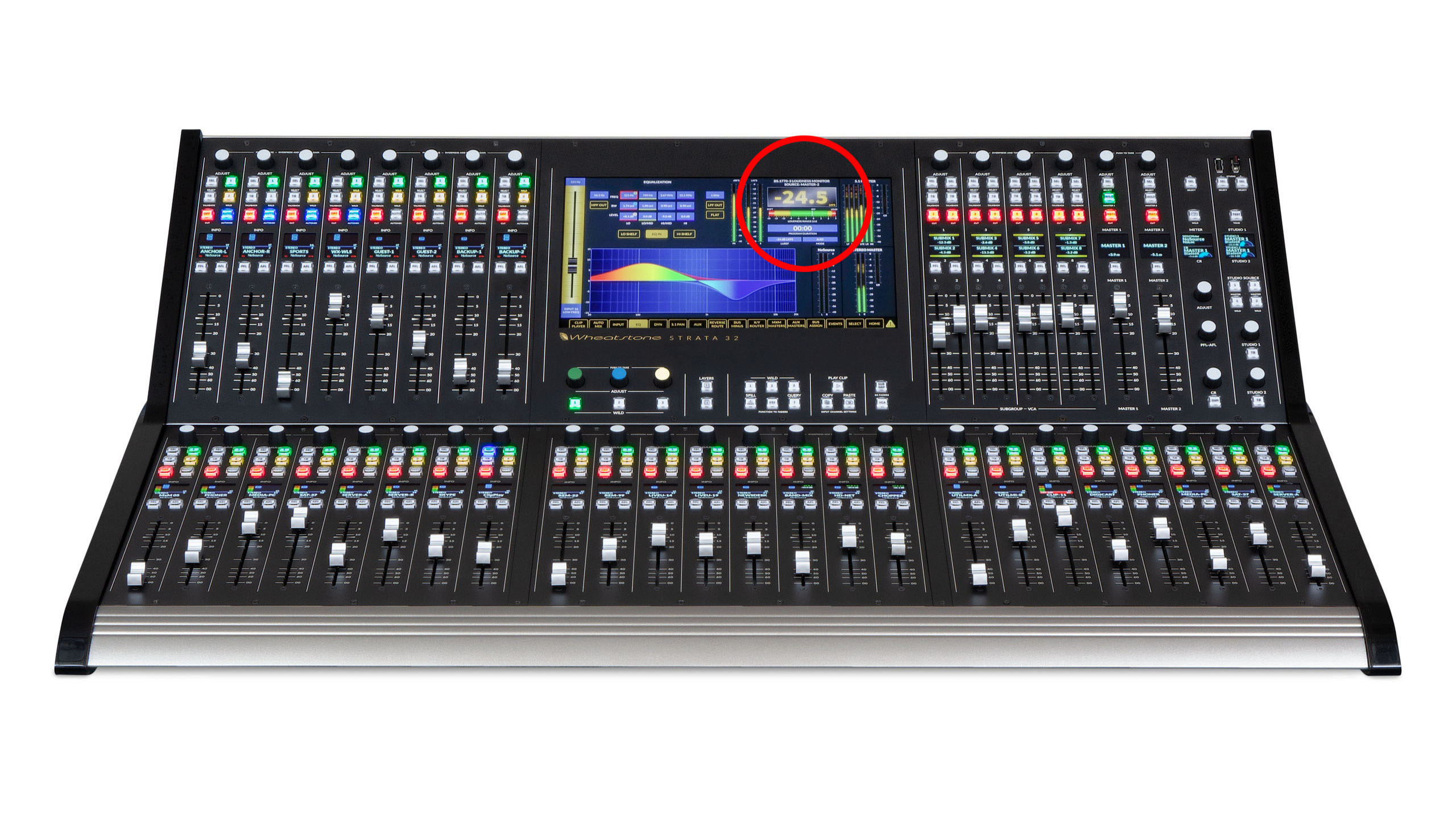
 Loudness indicator for compliance with the ITU BS.1770-3 and similar television loudness standards. This indicator came about initially in response to the need to assess and regulate the loudness of adverts compared to regular programming. The Loudness Unit Full Scale (LUFS) or Loudness K-weighted Full Scale (LKFS) measurement shows the averaged loudness level of audio over time, usually much longer than that of a VU meter. The average loudness target level is -24 LKFS or -23 LUFS. By the way, you can’t miss this on a Wheatstone audio console—the LKFS/LUFS numbers are two inches high on the display screen. One LU (loudness unit) is equivalent to 1 dB, so there’s a direct correlation between how far the meter says you’re over/under and how far you move a fader to compensate.